Showing posts with label All Things Books and Music. Show all posts

Saturday, July 21, 2007

Silence Falls Across the Land...

In cities and towns nationwide, a hush falls over the land.

Main Streets, normally bustling thoroughfares of commerce and traffic on beautiful Saturday afternoons, are empty.

Neighborhoods, usually teeming with kids and teens, are eerily silent.

In homes and dwellings across the country, millions of readers--young and old--are cracking open a book and reading these first words:

The two men appeared out of nowhere, a few yards apart, in a narrow, moonlit lane....

Happy reading, Harry Potter fans everywhere!

Monday, July 16, 2007

More Meme


And while we're on the subject of meme, this one comes via Sideon. Here are the rules:
  • Grab the nearest book
  • Open the book to page 123.
  • Find the fifth sentence.
  • Post the text of the next four sentences on your blog along with these instructions.
  • Do not dig around for the 'cool' or 'intellectual' book on your shelf. Do not go to the other room to find an old textbook. Just pick up whatever is lying at hand.
My book: Literature from the "Axis of Evil". This is taken from the story "A Tale of Music" by Kang Kwi-mi of North Korea. The book is a collection of essays and short pieces by renowned authors in countries the Bush Administration considers "evil."

Soon after, I discovered a surprising bit of news in the Rodong Sinmun. The government awarded citations to those who had achieved great feats in building monuments, and my brother's name was on the list of recipients. Pak Song-won. It was clearly my brother.
And again, as with the other meme from tonight, if you want to participate, go for it!

Sunday, June 24, 2007

Summer Reading: Of Mockingbirds and Assholes, Among Others

I know I have a list in the sidebar of the three books I'm currently reading, but the truth is, I'm actually reading lots of stuff. Of note right now are these two books:

Mockingbird: A Portrait of Harper Lee by Charles J. Shields
The No Asshole Rule: Building a Civilized Workplace and Surviving One That Isn't by Robert I. Sutton, Ph.D.

The former is a lovely, well-researched portrait of Nelle Harper Lee, the author of the one-hit-wonder To Kill a Mockingbird. It can't be properly called a biography, because Lee refused to grant interviews or materials to the author. Rather, Sheilds has carefully culled from newspapers, school records, historical documents, as well interviews with friends and associates and the writings of Truman Capote--Lee's best friend growing up in Monroeville, Alabama and continued confidante into adulthood--to compile this book.

I'm about halfway through it. It's an easy read and well-written. Shields is a masterful storyteller and, at times, this book reads like fiction (though its content clearly isn't) in that he weaves his information into a story as told through the eyes of others. If you liked To Kill a Mockingbird and you've wanted to know about its author, read Mockingbird.

The latter book I'm reading for myriad reasons, about which I shan't go into great detail as this is a public blog. By reading it, I am not in any way implying that my current employment situation is anything but positive. I'm reading this book, because it's always good to understand how one fits in an organization and ones impact within the organization. I will, however, point out at the very least Sutton's test for determining if you are an asshole or if you work with an asshole.
Test One: After talking to the alleged asshole, does the "target" feel oppressed, humiliated, de-energized, or belittled by the person? In particular, does the target feel worse about him or herself?

Test Two: Does the alleged asshole aim his or her venom at people who are less powerful rather than at those people who are more powerful? (p. 9)
Add to that these statistics: 50 percent to 80 percent of employees (subordinates) report that their superiors have been abusive. Within peer-to-peer ranks, coworkers experienced nastiness 20 to 50 percent of the time. "Upward nastiness--where underlings take on their superiors--occurs in less than 1 percent of cases." (Emphasis added; p. 23)

Certainly a book I would recommend, especially as it seems that work has become a much more hostile, unpleasant setting for many people these days.

On top of those two books, I'm also reading Juanita Brooks' The Mountain Meadows Massacre, John McPhee's Coming Into the Country, and Literature from the Axis of Evil: Writing from Iran, Iraq, North Korea, and Other Enemy Nations--A Words Without Borders Anthology.

As I said to a friend the other day, it would be great to win the lottery and then just read, write, and snap pictures all day. Oh well. I suppose snatches of reading here and there will suffice for now.

Tuesday, June 19, 2007

Shaken and Stirred

Pink Martini

In one word: AWE.SOME.

The Portland, Ore.-based group performed last night at Wolf Trap and it was, hands down, the best concert I have ever been to. Worth every single one of those 1,800 pennies, plus fees, I spent on the ticket. (Hell, if the tickets had been five times that, it would have been worth the $90.) If they’re coming to a theater, concert hall, event, or venue near you, run—do not walk—to see and hear them.

The evening started with their interpretation of Ravel’s Bolero. Normally a piece I don’t often care for, in the hands and under the talent of this ensemble, it was a swaying, upbeat introduction that foreshadowed what we could expect the rest of the evening. In fact, at one point, I mislabeled this and thought they were playing the theme from “Lawrence of Arabia” because of its masterful handling and rousing strains and swells.

Led by Thomas Lauderdale, an extraordinary pianist and—dare I say it?—choreographer, the 12-piece ensemble of musicians, along with vocalist China Forbes, have set the standard for intelligent, yet fun, entertainment. Pink Martini Live is the best high outside of illegal substances and chocolate!

Out of three albums—Sympathique (1997), Hang On Little Tomato (2004), and Hey Eugene! (2007)—Pink Martini performed no less than two-thirds of their repertoire. Among the songs they sang (and in no particular order, because I didn’t take notes at the concert. Nor is the list exhaustive, for the same reason):

* Amado Mio
* Donda Estas, Yolanda?
* Sympathique
* Andalucia


* Una Notte A Napoli
* Clementine
* Kikuchiyo To Mohshimasu
* Hang On Little Tomato
* Song of the Black Swan


* Everywhere
* Mar Desconocido
* Taya Tan
* City of Night
* Bukra Wba’do
* Hey Eugene!
* Dosvedanya Mio Bombino
* Brazil


The last song—Brazil—was the final piece they performed as their encore, which featured a set of three songs to round out the night. From beginning to end, Pink Martini had us swaying, clapping our hands, dancing along, singing outloud, and just plain being blown away by this amazing group of artists and their talent. Bravo is a paltry accolade indeed!

Of the handful of concerts I’ve been to in my life, this one was the very best I’ve ever attended. In fact, I was listening to their CDs in my car this morning on the way into work and I’ve concluded the only way to hear Pink Martini properly is live, they’re that good! The CDs lose the texture, depth, and energy that the live appearances exude. Still, if you can’t see and hear Pink Martini live, buy their CDs. They, too, are worth every single penny.

To see if Pink Martini is coming to a venue near you, visit Pink Martini. To buy their CDs, visit their website or go to Amazon.com.

And like I said, if they are performing in your neighborhood, RUN and get tickets. Now! Believe me, you won’t regret a single minute of it.


Group Photo copyright: Pink Martini
Album covers courtesy of Pink Martini and Amazon.com

Monday, May 07, 2007

Ell-Aa-Em-Ee

Lame.

That's what this blog is lately.

L. A. M. E.

Of course, it's not like there's nothing to write about these days. Unfortunately, what there is to write about is the same-old, same-old that there was to write about last week and that there will be to write about next week. It's like the Pulitzer Prize-winning, Oprah-blessed book I just finished reading, The Road, by Cormac McCarthy. Also lame. (And how does a book that doesn't use contractions garner the Pulitzer? What are the criteria these days? Laziness in grammar? Saving trees by eliminating contractions and quotation marks, thereby saving 3.6 sheets of paper out of a 287 page book?)

I'm not even going to bother fully reviewing this book. Suffice it to say, the same scenario plays out over and over and over again with only minor variation here and there. In the end, the father dies and the son is left alone to fend for himself, but only long enough to cry crocodile tears before other survivors of the nuclear holocaust come along and take him in. This is a book that many of the nation's largest newspapers have anointed "the best book of the year."

How or why, I haven't a clue. If you've read it and can tell me how this book is comparable to a classic like William Golding's Lord of the Flies, I'll give it a second chance. Until then, lame. Out of five stars, minus three.

And continuing on a theme of lame...

This blog.

Also lame.

Nothing happenin' here.

Lame.

I need to dig my head out of whatever hole it's buried in and get back on the horse.

Hm. Mixed metaphors; a sure sign my writing is going to hell in a handbasket.

Wednesday, March 07, 2007

"Switzerland Does Not Have An Army..."


"...Switzerland is an army." So says a Swiss army officer assigned to accompany American writer John McPhee as he travels around Switzerland on manuevers with the country's civilian military.

Lying in the depths of the Alps, Switzerland is Europe's bastion of neutrality and quirks. Known for its watches, banks, chocolate, pristine cities and landscapes, cow bells, yodelers, cuckoo clocks, and the Papal Swiss Guard, Helvetia is no larger than the U.S. state of New Jersey in both square miles and population. Nestled high in the alpine mountain ranges that stretch from France to Austria, Switzerland lies snuggly between France to the west, Germany to the north, Austria to the east, and Italy to the south. Divided into cantons, Switzerland is a multi-lingual confederation with four official languages: French, German, Italian, and Romansch (a mish-mash of French, Italian, Spanish, and Catalan.)

Switzerland is defended by a professional and civilian militia composed of little more than 650,000 citizen soldiers. The Swiss Army, most famous for its iconic little red, utilitarian knife, is able to mobilize in less than 48 hours and lockdown Switzerland into an impregnable fortress, should any nation be foolhardy enough to invade it. These are no weekend warriors, either. Every soldier participates in maneuvers several times a year and their employers not only support their military activities, they structure their civilian, private sector to mirror the military establishment. Rank in the army equals rank in Swiss society, particularly in the professional arena. High-ranking Swiss Army officers can be found in the executive suites of some of Switzerland's largest companies.

McPhee is paired up with Luc Massy, a vintner from the Canton de Vaud and patrol leader of a Section de Renseignements, as he ventures around Switzerland on patrol, observing military manuevers. He describes his journeys around the alpine nation in his book La Place de la Concorde Suisse. McPhee describes hidden entrances and doors that open in the sides of otherwise normal looking rock faces, only to reveal hidden fighter jets and artillery, which can be rapidly brought to bear against invaders. He notes the explosives carefully embedded, catalogued, and maintained in bridges over the Rhone River--all for the purpose of destroying the bridges and cutting off access to key segments of Switzerland. McPhee also describes Switzerland's vulnerabilities and the difficulty of defending the flat lands, which includes one of the country's largest cities, Basel.

In a surreal picture, McPhee takes us on manuevers in the villages and alp valleys where the town's citizens are nonplussed by the presence of soldiers with backpacks and automatic weapons marching in formation through town and up into the hills and mountains surrounding their villages. With a precision only the Swiss possess, these citizen soldiers map out every square inch of Switzerland, leaving no stone unturned or indefensible. On the side, McPhee also discusses the Swiss Army's contributions to the mercenary armies of Europe--most notably the French Foreign Legion and the Papal Swiss Guard.

I picked up La Place de la Concorde Suisse after reading Rising from the Plains because I was fascinated by the topic and wanted a glance into the precise psyche that are the Swiss. Plus, as an undergrad, I spent a semester studying Swiss literature and Swiss neutrality, of which the latter remains of particular interest. La Place de la Concorde Suisse was not as well-written as Rising from the Plains, but it was good enough and out of the ordinary such that it held my attention for its entire 150 pages. That said, if you'd like a unique look at Swiss culture, this is a good book for that.

Out of five stars, I give this one a three and a half.


Photos: Dustcover for La Place de la Concorde Suisse; John McPhee; The Swiss Guard; postage stamp commemorating the 500th anniversary of the Papal Swiss Guard.

Photo and/or illustration copyrights: Farrar, Strauss & Giroux; Peter Cook; The Holy See; Swiss Post.


Tuesday, February 27, 2007

Plain Talking

Devil's Tower National Monument, Wyoming

One of the general ed requirements for a bachelor of arts degree from George Mason University—and probably at all universities that offer liberal arts degrees, for that matter—is six units of science. When I was an undergraduate at GMU, I chose geology for my science credits. Mostly I chose it because I was in my senior year and everyone I asked said, of all the sciences, it and astronomy were the “easiest.” I confess: I chose easy over whoppingly difficult because I was in the midst of applying to graduate schools and I didn’t want to mess around with my GPA by bombing quantam physics and chaos theory. So, geology it was.

Despite my less-than-noble reasons for my choice, I fell in love with this field of science pretty quickly. Another confession, though: In my rush to graduate, I only gave it cursory time and attention. Still, it fascinated me then and I remain so today.

As a result, reading about geology—the building blocks of our planet—and Earth’s constantly changing heights and depths continues to hold my interest. I love me a good piece of folded and tilted rock or a lovely piece of schist. I marvel at marble and gravitate to granite. I thrill at finding outcrops and love to look at the sedimentary layers, as well as the water and wind erosion patterns, in sandstone. Diamonds may be most girls’ best friend, but I’m just as happy with the exoskeleton of some coral-based sea creature.

This is why when my friends, The Legislative Fellow and The MIG, recommended the writings of John McPhee, I ran right out to Amazon and bought McPhee’s Rising from the Plains (as well as a half dozen of his other books. Stay tuned to this spot for reviews of his writings on the Swiss Army, the U.S. Interstate System, U.S. commerce and its methods of transportation, Alaska, and California.)

My interest in this particular McPhee was twofold. First, it is about Wyoming, which is where my mother was born and raised and where my late grandparents lived for 60 years. It is where I spent a good chunk of my youth, including two weeks during the summer when I was 12. Second, Rising from the Plains is about geology.

Published in 1986 (the year I graduated from high school)—Rising from the Plains chronicles essayist John McPhee’s journey across the Equality State as he pairs up with preeminent geologist David Love. Dr. Love, the grandnephew of conservationist John Muir, was the last of a dying breed of geologic scientists. Simply put, Love was a field geologist. While many geologists today rely on high tech gadgetry to identify seismic instabilities, plumb oil beds, or locate stable bedrock, Love actually went out in the field and dug around—often sleeping under the stars without a tent or other standard provisions.
In the western outskirts of Rawlins, David Love pulled over onto the shoulder of the interstate, the better to fix the scene, although his purpose in doing so was not at all apparent…. So why was…Love, who had the geologic map of Wyoming in his head, stopping here?

The rock that outcropped around Rawlins, said Love, contained a greater spread of time than any other suite of exposed rocks along Interstate 80 between New York and San Francisco. We were looking at many moments in well over half the existence of the earth, and we were seeing—as it happened—a good deal more than one sees in the walls of the Grand Canyon. (p. 21)
If you’ve ever been to Rawlins, Wyoming—and I have—it looks like one more dust-bitten, sandstone-landscaped, sagebrush-infested, dead desert. But McPhee challenges us to wipe the dust from our shallow eyes and look deeper. What we are looking at, though hard to believe, are the beginnings of the North American continents. Realizing this, suddenly Rawlins doesn’t look as dumpy and godforsaken after all. Here, perhaps, is the primordial Eden before Eden was Eden and before Adam and his progenitors started pounding sand and digging up the land for railroad rights-of-way, oil and natural gas exploration, coal mining, and trona (the stuff from which baking soda is made.)

Love is, as McPhee portrays him, a simple man with more than an ounce of Wyoming horse sense running through his veins. He knows Wyoming like the back of his hand and McPhee mines his knowledge in a manner that brings this science down to earth for readers, pun intended. At the same time, mirroring the sandstone and granite layers that cover Wyoming, McPhee beautifully spins and layers the history of Love and his ancestors, who came to Wyoming when it was being settled by only the hardiest of souls, including his father, John Love, the son of Scottish emigrants and a rancher, and his mother, Ethel Waxman, a graduate of Bryn Mawr and a school teacher.

If you enjoy geology or if you’ve brushed off southern Wyoming as uninteresting, McPhee’s Rising from the Plains will change your perspective entirely. At the very least, you’ll learn a lot about geologists and what makes these erudite rockhounds tick.
Geologists tend to have been strongly influenced by the rocks among which they grew up…. Structural geology…has traditionally been dominated by the Swiss, …wizards of sedimentology tend to be Dutch, …Cincinnati has produced an amazingly long list of American paleontologists…[and] Houston—the capital city of the oil geologists—is a hundred and fifty miles from the first place you can hit a hammer on a rock. Houston geologists come from somewhere else… (pp. 24-25)
I thoroughly enjoyed this book and came away with a new appreciation for Wyoming and its place in the geologic life of our earth and this continent. It made me want to get in my car, drive to Wyoming, seek out Love's son—a geologist and professor at Western Wyoming Community College—and spend a week seeing the real Wyoming.

Out of five stars, I give Rising from the Plains four and a half.

McPhee, John, Rising from the Plains, Farrar, Strauss & Giroux, New York, 1986,

More information about David Love:

High Country News
Geotimes (Feature Article)
Geotimes (In Memoriam)

Photos: Devil's Tower National Monument (top), dustcover for Rising from the Plains (center), David Love (1914-2002; bottom.)

Photo copyrights: TerraGalleria, Farrar, Strauss & Giroux, Geotimes.

Wednesday, February 14, 2007

In a Perfect World, I'm Not Too Late for a Pink Martini, Am I?

Don't you just love my titles? Okay, maybe not all of them, but this one's a goody, I think. Here's why...

A couple of Fridays ago, I had friends over for dinner. Dr Lala was in town, so I invited my friend (and Dr Lala's ex-beau) The Legislative Fellow and his wife, The MIG (Meat is Good). We had what is referred to as "Taco Night." All the fixin's for yummy tacos, including ground chicken drenched in chopped jalepenos, Penzey's taco seasoning, and the juice from half a lime for brightness...

After we stuffed ourselves with all things taco, we cleared the table, loaded the dishwasher, made tea, and broke out Apples-to-Apples. As background music, we first put on Norah Jones' newest album Not Too Late. After we enjoyed that, I put on Madeleine Peyroux's (pronounced "Peru") The Perfect World and we enjoyed smoky, lounge music. After the last notes of Madeleine had faded, I traipsed upstairs (can you do that on stairs? Traipse? Climb probably would have been more appropriate and accurate. Oh well...) As I was saying, I traipsed upstairs and retreived Pink Martini's Hang On Little Tomato.

If you like Norah Jones, hopefully you've checked out her latest. Not Too Late once again features Jones' warm vocals with a twist of jazz thrown in for deeper layering and texture. Of her three albums, I have to say, there's a lot about this one I like as much, if not more, than her previous two albums.

"Not Too Late" showcases Jones' songwriting talents and brings out a rawness that you feel in every note she sings. Whether it's "Sinkin' Soon" with its sassy, wailing sax and stylization a la Louis Armstrong or "My Dear Country" in which Jones expresses her frustrations with the current state of political affairs in America, this album is equals parts edgy and warm.

Moving from Norah Jones, we then listened to Madeleine Peyroux. A native of Georgia, Peyroux was recently featured on NPR's Morning Edition. She has been compared to Billie Holiday and her ability to convey sultry is certainly not to be questioned. There is a clarity to her smoky voice that makes listening to her akin to savoring fine, silky chocolate under low lights with close friends.

Her album, The Perfect World, calls to mind all of the elements that are so enjoyable about older music--good lyrics, good rhythm, good instrumentals. Peyroux has fun with her music as manifest in "Blue Alert" and "A Little Bit." She also does a lovely version of "River," as well. Other favorites on this album include "I'm All Right" and "Once in a While." The latter flows like a slow, meandering stream. All in all, one of my favorite new albums.

Pink Martini's Hang On Little Tomato was the album that ultimately rocked the night, though. This album gives you a little bit of everything that makes good music great. At times, it's jazz. Then it's cinema. A switch again and it's Latin. And then again, it's cabaret. It's like a seven course repast--at times sweet and racuous and fun, then mellow and candlelit.

A product of the People's Republic of Portland, Oregon, Pink Martini utilizes its mix of genres confidently and adeptly. This album had us tapping our feet and, by the end of the evening, we were dancing around the kitchen and dining room in modified Latin fashion. Hang On Little Tomato will provide you a feast that will leave you not only sated, but wanting a second helping or a doggie bag. (The MIG took my copy of HLT home on loan. No doubt, she's been enjoying seconds for the last couple of weeks! And Dr Lala went to Borders the next day and bought this album, as well as PM's Sympathique.)

If you're looking for the perfect Valentine's gift for yourself or someone else, anyone of these albums will fit the bill.

Saturday, February 10, 2007

Another Book Meme?! No!

I’ve been tagged by JaneAnne. Here goes.

Hardback or trade paperback or mass-market paperback? No particular preference, although, I’ll admit: I’m a snob and a misophobe and prefer my books new. This is why I don’t have a library card. I don’t know who's sneezed in the books at the library. My one exception would be good condition books I buy either at used bookstores or at the Wheaton Library Bookstore.

Amazon or brick and mortar? Amazon. If I go into a retailer, I end up buying more than I went in for. Amazon has saved me money, because I just order what I wanted. I don’t browse.

Barnes & Noble or Borders? Borders, but if B&N is more convenient, I’ll go there. I also try to support small, independent bookstores, if they're around.

Bookmark or dog-ear? Both. I use a bookmark to note where I’m at in the book, but I dog-ear if there’s a particular passage I want to remember.

Alphabetize by author or alphabetize by title or random? Neither, nor. I group by topic or theme. For example, I have two shelves of nothing but World War II and the Holocaust, a shelf or two of biographies, shelves of cookbooks and Cook’s Illustrated, sections on religion and society and religion and spirituality, religious texts (Bibles, prayer books, etc.), children’s books… Well, I’m sure you’re getting the picture.

Keep, throw away, or sell? It’s hard for me to get rid of books, unless they’re really, really bad or I’ve ‘outgrown’ their needfulness. I never throw away books; just because I might not have liked it, doesn’t mean someone else won’t. I haven’t sold books yet. I usually give them to Goodwill or the Wheaton Library Bookstore.

One thing I absolutely never, ever, ever do is lend books. I never get them back in the same condition in which I lent them out. My books are pristine and on the few regrettable occasions that I’ve lent out, they’ve come back tattered and torn. I even had a book come back once with coffee stains on it. I’ll buy you the book first before I’ll lend it to you. So, please, don’t even ask.

Keep dustjacket or toss it? Keep. Although, I’m going back and forth on this one lately.

Read with dustjacket or remove it?
Remove it, so it doesn't get battered.

Short story or novel? Either.

Collection (short stories by same author) or anthology (short stories by different authors)? One author. Short stories are an art form and few people have properly mastered it.

Harry Potter or Lemony Snicket? Neither. I’ve read a few of the Potter books, but they’re overly long and only okay. I can take ‘em or leave ‘em. That said, though, I'm thrilled that they've contributed to increased reading by young people. With computers and Game Boys and iPods and all the other gadgets kids have these days, it thrills me when I see a kid with a book in their hand. If Harry or Lemony piques their interest and gets them reading, that's fine by me.

Stop reading when tired or at chapter breaks? I stop wherever I am, whenever that is.

"It was a dark and stormy night" or "Once upon a time"? When I’m interested in a new book, I generally flip to the center of the book and read a few pages. If it grabs me, I’ll buy it. If not, I reshelve it. I don’t trust first lines. However, if I had to choose between “It was a dark and stormy night” or “Once upon a time,” I’d take the former. I don’t understand why this sentence was panned so long ago. It’s descriptive. It sets the mood. It’s ominous. Once upon a time is unimaginative.

Buy or Borrow? Buy. In addition to never lending, I also refrain from borrowing.

New or used? Ninety-eight percent of the time, new.

Buying choice: book reviews, recommendation or browse? Depends on my mood. Although, I rarely read book reviews, aside from what’s on Amazon. I suppose that makes me a peasant.

Tidy ending or cliffhanger? Hadn’t really thought about it. I like books that make me think; if the ending is tidy or leaves me hanging, I’m indifferent. If, on the other hand, the book just ends and I’m left asking myself, “What was the point of that?!” then it pisses me off.

Morning reading, afternoon reading or nighttime reading? Whenever and wherever except at the dinner table or in the bathroom.

Standalone or series? Mostly standalones, though I’m currently caught up in reading John McPhee’s books.

Favorite book of which nobody else has heard? The Physicists, Fredrich Dürrenmatt.

Favorite book(s) read last year: Rising from the Plains, John McPhee. I read quite a bit last year, but I can’t recall what, aside from McPhee.

Favorite books of all time? See here.

Tag? My siblings (you can post it in the comments, if you want), Sister Mary Lisa, The Gunfighter, Holly, Creole Princess, Zanne, Church of the Big Sky.

Wednesday, January 24, 2007

Snowed In

In addition to the loftier reading I often do, I also occasionally dabble in lighter reading. A case in point would be the mystery novels of Wyomingite C.J. Box. Set in fictional Twelve Sleep County, Wyoming, Box's books feature soaring landscapes and small town politics. His protagonist is a bumbling, but lovable Fish & Game Warden, Joe Pickett.

The third in Box's six-book Pickett series, this tale finds Pickett once again battling small town mentalities, as well as trigger-anxious federal authorities seeking revenge for the murders of a Forest Service officer and a Bureau of Land Management employee. Their target is a wacko millenialist group camping illegally on federal land in the Bighorn Mountains.

Pickett doubts the government's claim and fights to set the record straight before tensions rise and ignite another Waco, all while battling against the worst of Wyoming elements: a wicked, winter snow storm.

If you like an easy read, Box's books are good for settling in on a cold evening. No, this isn't heady intellectual reading and they aren't the classics, but if you don't want to think too much and you just want something different for a change, check out his Joe Pickett series. Out of five stars, I give this one a four.

Monday, January 22, 2007

In Which Pooh Bear Becomes a Taoist

I received a copy of The Tao of Pooh this year as a Christmas gift from a friend. This is one of those little books I considered picking up in the 1990s, when it was all the rage and I was in graduate school in hippy dippy, Buddhisty, tai chi, Tao heaven--Berkeley. For some inexplicable reason, I never did. Having received it as a gift, however, I decided it was high time I read about Winnie the Pooh and Taoism. It's a quick, easy read. I read it over a day and a half (which is good for me. It can sometimes take me weeks to read a book because I don't dedicate extended chunks of time to it. I read in dribs and drabs. Sidenote: why does that phrase always sound obscene? Anyway...)

At a mere 158 pages, Benjamin Hoff, a self-confessed Taoist, uses A.A. Milne's Winnie the Pooh and His Friends to explain the age-old principles of Taoism. "While Eeyore frets... and Piglet hesitates... and Rabbit calculates... and Owl pontificates... Pooh just is," reads the dust cover. The point of Taoism is learn to live in harmony with the earth, the heavens, and all that we encounter in life. I suppose for the western mind, teaching Taoism requires a metaphor or a symbol that we can understand and relate to. In this sense, Hoff's book is rather Taoist in its approach to teaching.

Perhaps the book didn't resonate that deeply with me because I experienced some of its precepts of living in the present through a course I took in grad school--Spirituality in World Religions. I've had a taste of Taoism and it is indeed sweet. If you've wondered about or tried to grasp the principles of Lao-Tsu, this is a good book to start that "journey of a thousand miles" which always "begins with one step."

Out of five stars, I'll give this one a three and a half for its simple format and metaphors.

Tinker with My Tailor as I Spy

Several weeks ago, I picked up a copy of John le Carre's great spy thriller Tinker, Tailor, Soldier, Spy at the Wheaton Library Bookstore. While I'm not one to often read spy or espionage thrillers, occasionally I don't mind one or two of these as fluff tomes on the bedside stand. They're something I can read as I'm drifting off to sleep and not feel bad about missing something or having to go back and re-read and capture all the important bits. I've heard that le Carre's works are must-reads if you've ever read Ken Follett, Tom Clancy, or Alistair McLean. Noting that, I figured for 50 cents, I could read le Carre.

Very simply put: I didn't even finish this book. It's not even a keeper; in fact, it's back in the pile of books to go to the library bookstore the next time I take a trip up there.

If you've stuck with me beyond that last sentence, perhaps you're asking why I didn't finish TTSS? After slogging through 136 pages, I had yet to grasp what the plot was. None of the characters stood out in any extraordinary way, save John Priddeaux. At no point was there a "thrill factor"--nothing that made my heart beat faster or eagerly turn pages or even be surprised by a twist in the plot I had failed to see coming. For all the hype around le Carre I have to say that frankly, I find Agatha Christie's writing far more interesting and exciting.

The problem with le Carre's TTSS is, I was never sure if it was a spy thriller or a commentary on the politics within the British intelligence community during the Cold War. If the former, it was poorly plotted and written. If the latter, it was dull as dust in the desert. Regardless of what this book is or isn't suppose to be, I finally quit because it simply wasn't worth it. Out of five stars, I give this one a zero.

I still want to see the movie starring Sir Alec Guiness, though. I'm hoping that will at least redeem le Carre's work.

Saturday, January 13, 2007

Desperately Mousey

In addition to Stephen Fry's Moab is My Washpot, I just finished reading Kate DiCamillo's The Tale of Despereaux: Being the Story of a Mouse, a Princess, Some Soup, and a Spool of Thread. I loved DiCamillo's heart-warming tale Because of Winn Dixie and naturally assumed I would like this book. I'll confess, I approached it expecting something along the lines of Robert O'Brien's classic, Mrs. Frisby and the Rats of NIMH. I probably shouldn't have had O'Brien's book in mind when I read DiCamillo's because I found Despereaux, et.al., horribly disappointing.

It isn't so much the storyline itself as it is the way DiCamillo chooses to tell the story--in a patronizing tone that, as an adult, is maddening. Were I a child, it would have been nothing shy of insulting to my five-year old intelligence, both in the sense of being smart enough to grasp the story and young enough to appreciate the magic of this rodent fantasy.

Case in point: DiCamillo repeatedly engages the phrases, "And do you know what happened next, dear reader?" or "Dear reader, do you know what the word [insert 50 cent word here] means?" Stuff and nonsense like that. Of course most five-year olds don't know what the word desperate means, but I have yet to find a five-year old who doesn't stop you midstream and ask on his/her own, "What does desperate mean?" (And the child who doesn't ask should have their parents flogged. Or, have we reached a point in this country where kids really are that dumb? But I stray.)

Beyond the lovely idea that a mouse could escape a dungeon and rescue a princess, this book is one I'm glad I borrowed and didn't buy. Even the illustrations were awful. Granted, the story is dark and frightening, but the drawings of the rats by illustrator Timothy Basil Ering looked like first round concept sketches that never made it out of editing and into a second or third round of final drawing.

All in all, a ghastly book. Out of five stars, I'm being generous in giving it a two. Here's hoping The Miraculous Journey of Edward Tulane is better. Does anyone have a copy I can borrow?

Washing Pots in Moab

I'm working through my piles of books and this morning finished reading Stephen Fry's autobiography, Moab is my Washpot. At 436 pages, the 'good bits' don't start until around page 357. Still, it's an interesting look into the life of one of Britian's funniest funny men. Fry speaks candidly and with rawness about the first 20 years of his life.

Behind the face that is Jeeves of Jeeves & Wooster lies the early years of a young boy and adolescent who struggled to find his voice and his place in English society. The middle child of three and son of an inventor, Fry spent his formative years, as do many of England's young people, attending boarding schools and pulling off pranks and pratfalls in the midst of learning. In between, he engages in petty theft and credit card fraud--crimes that eventually land him in court and prison charged as a felon. He sees the error of his ways and extracts himself from a future of dead-ends, applies himself, and goes on to succeed at Cambridge, becomes friends with the likes of Hugh Laurie and Emma Thompson, works as a headmaster teaching English, German, and History, and goes on to become not only one of England's hail and hearty comedians, but a spokesperson for mental illness.

Fry's autobiography also speaks of his struggles finding love and figuring himself out. He finally embraces his sexuality when he falls in love with a school chum called Matthew. While he makes no excuses for his petty thievery and wayward decision making, he does venture that society's inability to embrace homosexuality likely contributed to his misbehavior and petulance. In figuring out himself, Fry engages in some Byronesque writing that is some of the best reading in his autobiography.

All in all, an intriguing book. Written in a rambling, British conversational, stream - of - conscientiousness manner, Moab is My Washpot can be a bit of a slog, but if you're willing to read beyond page 357, you'll find a well-written story that highlights the complexities of human existence and evolution of character. Out of five stars, I'd give this a three. (And a thanks to my friend Hilary for gifting this to me.)

Monday, January 01, 2007

Resolute Bookends

I have stacks of books sitting in my office, on my nightstands, and in my bookcases that I am bound and determined--i.e. resolute--to read this year. And it doesn't help that I discovered the Friends of the Library Bookstore at the Montgomery County Library in Wheaton, Maryland, last year. That's just added to my pile of to-be-read books. Nevertheless, I bring you the first meme of 2007: The Book Meme. (Didn't I say somewhere once in a year past that I don't normally do these things?!? I guess I lied.)

1. The name of a book I have read more than once.

There are so many and the range is broad. I just re-read Mrs. Frisby and the Rats of NIMH. I've re-read The Diary of Anne Frank; Corelli's Mandolin; The Lion, the Witch, and the Wardrobe; The Hours; The Physicists; East of Eden; A Prayer for Owen Meany; Roll of Thunder, Hear My Cry; The Good Earth (which I read long before Oprah ever 'book-clubbed' it); Pride and Prejudice.... The list could go on and on and on.

2. If I could have one book while stuck on a deserted island.

One book... One book? Only one book?! Hm. Well, I'm not sure that's really fair. I mean, it's not as though you can simply have a category called 'books.' There are so many possibilities and interests to be had in books. Still, from a practical standpoint, if I was stranded on a deserted island, I'd want some kind of survival manual (and I'm not talking Martha Stewart Living!)

If, on the other hand, I ended up deserted on an island that had materials for building a hut, a fresh water source, and the ability to make fire and catch fish, then I think I'd want C.S. Lewis' Mere Christianity. It's a tiny book, but each sentence is packed with material that will give you food for thought for days, weeks, and months on end.

3. A book that made me laugh.

A Wish for Wings that Work, Berkeley Breathed. Actually, anything Berkeley Breathed is guaranteed for good chuckle. In terms of all-out guffaws, that would be Sleeping at the Starlite Motel by Bailey White.
4. A book that made me cry.

Bridge to Terebithia, Katherine Patterson. It's a young adult (what you'd probably call 'tweens today) classic and the first book that came to mind, because it's the first book I remember reading that made me cry. It's ageless and I enjoy reading it again from time to time.

5. One book I wish I had written.

Mormon Enigma: Emma Hale Smith, Linda King Newell and Valeen Tippetts Avery

6. One book that I think shouldn't have been written.

The Historian by Elizabeth Kostova. Biggest freakin' waste of a good chunk of my summer reading time (read about it here.) Someone should have driven a stake through this blood-sucking, tree-killing tome. So not worth it.

And while we're on the subject, anything written by Ann Coulter also goes in the "not worth it" category.

7. A book I'm currently reading. (That should probably say books.)

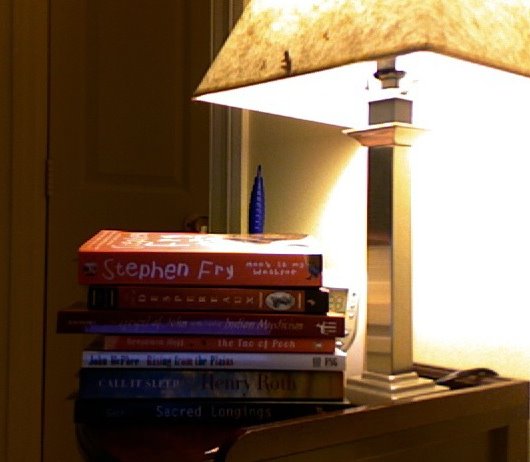
Moab is My Washpot, Stephen Fry
The Tale of Despereaux, Kate DiCamillo
The Gospel of John in the Light of Indian Mysticism, Ravi Ravindra
The Tao of Pooh, Benjamin Hoff
Rising from the Plains, John McPhee
Call It Sleep, Henry Roth
Sacred Longings: The Ecological Spirit and Global Culture, Mary C. Grey

8. One book I've been meaning to read. (Again, this should say books.)

Most of these I've read in part, but I'd like to read them in their entirety.

Mein Kampf, Adolf Hitler
The Holy Qu'ran, Mohammed the Prophet, PBUH
Midnight in the Garden of Good and Evil, John Berend
The Protestant Ethic and the Spirit of Capitalism, Max Weber
Democracy in America, Alexis de Tocqueville
A History of God, Karen Armstrong

9. One book that changed my life.

To Know As We Are Known, Parker Palmer

10. My favorite children's/youth books.

Also a tough one, because I have so many. I've listed several under #1. Others include:

Charlotte's Web, E.B. White
Tikki Tikki Tembo, Arlene Mosel
The Little House, Virginia Lee Burton
The Cay, Theodore Taylor
The Great Brain Series, John D. Fitzgerald
Little House on the Prairie, Laura Ingalls Wilder
A Chocolate Moose for Dinner, Fred Gwynne
Where the Wild Things Are, Maurice Sendak
Your Favorite Seuss, Dr. Seuss
Olivia, Ian Falconer

11. Other books that I think are noteworthy:

Woman: An Intimate Geography, Natalie Angier
The Rise & Fall of the Third Reich, William Shirer
Lee: The Last Years, Charles Bracelen Flood
No Man Knows My History: The Life of Joseph Smith, Fawn Brodie
To Kill a Mockingbird, Harper Lee
Gone with the Wind, Margaret Mitchell
The Survivor: An Anatomy of Life in the Death Camps, Terrence Des Pres
The God of Small Things, Arundhati Roy
I Know Why the Caged Bird Sings, Maya Angelou
Where the Sidewalk Ends, Shel Silverstein

I tag everyone who loves to read.

Monday, December 25, 2006

Day 25: Merry Christmas Meme

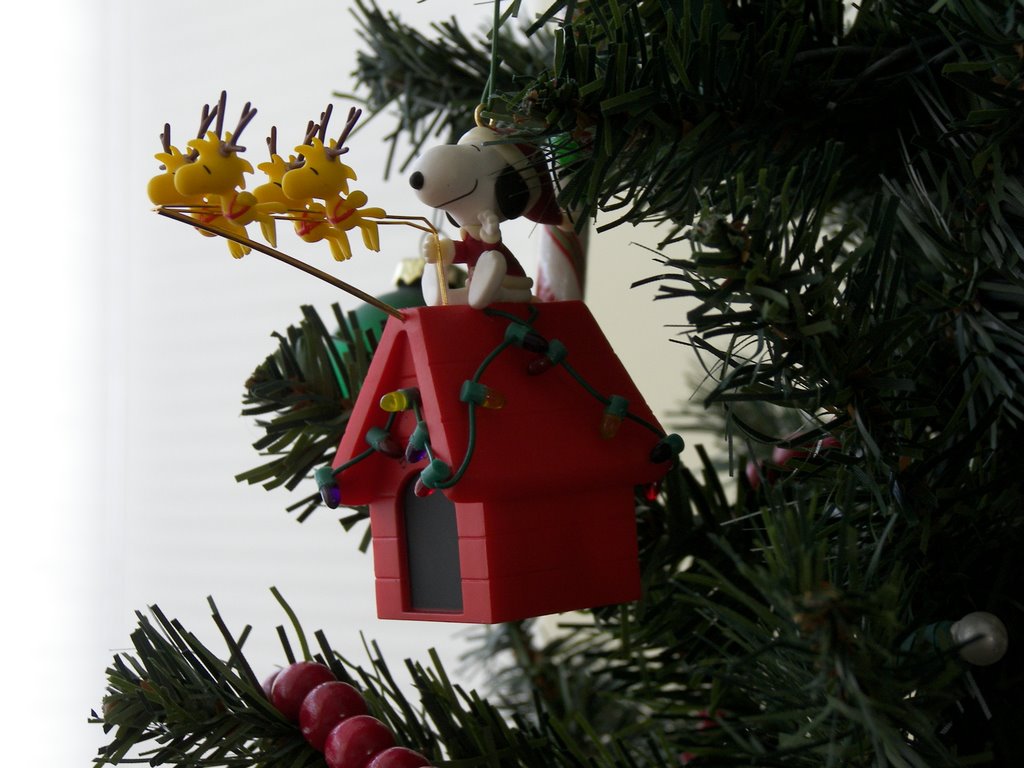
This meme came to me by way of my friend, Holly. The picture is a snapshot of my favorite Christmas ornament on my Christmas tree.

What greeting of the season do you use?
It all depends on who I’m greeting. Usually Merry Christmas prior to Dec. 25, then Happy New Year after Dec. 25. But I’m also known to tailor my greeting based on individuals and their holiday of choice.

Did you leave out milk and cookies for Santa?
Absolutely! Home made cookies, a glass of milk, an orange, and a couple of tiny candy canes. Santa always nibbled the cookies, drank most of the milk, and ate all of the orange. This year, Santa got homemade banana bread and egg nog.

What's one Christmas Eve tradition your family had?
When I was a kid, we’d get a new pair of pajamas that my Mom made. One year, I wanted a jogging suit, so she made me mint green terry cloth PJs with a pink stripe down the side. Another year, she made all of us nightgowns and stocking caps a la The Night Before Christmas. We also choose names out of a hat and give that person a gift that they open that evening. I have my sister this year and she’s getting this.

What's your favorite Christmas song?
My absolute favorite Christmas song is Stille Nacht, Heilige Nacht in its original language: German. I also like Liese Reiselt der Schnee. O Holy Night and Do You Hear What I Hear? (the version sung by Johnny Mathis) both come in a close second. I enjoy some of the more contemporary pieces, too, like John Lennon's Happy X-mas (War Is Over) and Amy Grant’s Breath of Heaven. And I get a kick out of the absurdity of Elmo & Patsy's Grandma Got Run Over By a Reindeer and Brad Paisley's new one this year, Penguin, James Penguin.

What's your least favorite Christmas song?
That would be a dead heat tie between The Twelve Days of Christmas, The Little Drummer Boy, and anything rendered by The Chipmunks. Horrible little beasts. They do unconscionable things to Christmas songs. They should be shipped off to Guantanamo Bay.

What's your favorite Christmas movie?
The Grinch Who Stole Christmas with Boris Karloff. The Jim Carey/Ron Howard version is dismal and was just one big piece of stock footage for Visa to use in their ads that year.

What about A Christmas Story?
I still don’t understand why this is such a cult “classic.” It’s a stupid movie and I don't care for it. I think the first--and only--time I ever watched it, I didn't finish it.

What's your favorite Christmas tv special?
I think it’s all those Frosty the Snowman and Rudolph the Red Nosed Reindeer ones. They use to freak me out as a kid, but they’re kind of nostalgic now. Besides, what's not to love about Burl Ives?

What's the best present you ever received?
The best present I ever got? The best present I ever got… Hm. Can I pick more than one?
Age 5: Hand made kitchen cabinet and stove/oven play set my Dad built for me. I’d give anything for a picture of that right now, or for the piece itself. I wonder if my parents still have it? It was yellow with blue accents and had lots of cupboard and counter space.
Age 12: A hi-fi, Technics turntable.
Age 14: A CD player.
Age 15: A really cool red ski sweater. (And I don't ski.)
Age 16: My very first Opus the Penguin. I still have him. And several others.
Age 27: A Panasonic microwave for my apartment.
Age 33: A Kitchen Aid.
Age 37: A set of nice Henckel gourmet knives.

What's the worst present you ever received?
Is there such a thing as a bad present? Isn’t that why gift receipts were invented? Actually, I know I’ve had a few over the years that I didn’t much care for, but I can’t remember what they were (I’m sure my siblings will be able to name a few for me with total recall.)

What's the best present you ever gave?
I think it’s going to be this year’s gift to my mom. My siblings and I put together a montage of photos and music about my grandparents and my mom and her sisters on DVD. (See yesterday's blog, "Homemade" for all the details.)

What's the worst present you ever gave?
I don’t give bad presents. All my presents are good.

What do you want for Christmas this year?
Peace on earth. A job. Freedom from want.

Is Christmas still a religiously significant holiday for you--in other words, do you celebrate it as the birth of the savior of humanity?
Yes.

Sunday, December 17, 2006

Day 17: Run, Don't Walk

Disclaimer: Please note: I know nothing about writing a critique of music, so for those of you out there who are musicologists or artists, please forgive my bumbling efforts to describe this excellent album.

If you're looking for an album worthy of your Christmas music collection, then run, don't walk, to your nearest, dearest CD vendor and buy Sarah McLachlan's pop holiday album, Wintersong.

This album breathes new life into many of the otherwise rote Christmas standards you've been listening to for years. While there are undercurrents of McLachlan's trademark breathiness, this album is robust and straightforward. It's also a much quieter, reflective album than I had expected.

The album begins with a matter-of-fact rendition of John Lennon's Happy Xmas (War is Over) that sets the tone of hopefulness for the entire musical experience. She follows this up with a melodic harmonized version of What Child Is This? that is unlike any previous recording you've heard.

River leads next and, for anyone who's ever lived in tropical-like climes and wished for snow at Christmas, this song will tug at your heart. The title track, Wintersong, is picturesque and lovely, but sad as it speaks of lost love in the midst of joy and celebration.

McLachlan's version of I'll Be Home for Christmas is quiet and warm, but certainly ranks right up there with Perry Como's version as a classic that invokes all those feelings about Christmas with family and things familiar that many of us miss and wish at this time of year.

The First Noel/Mary, Mary is a mix of a new agey rendering of the traditional hymn and a Negro spiritual in a blend that is stirring and haunting. This selection does a great job of highlighting McLachlan's range and talent--sort of like Enya meets Etta.

Her version of Silent Night isn't like any of the other 40+ versions I have in my iTunes collection. She sings the harmony and slightly ahead of the music on this one, and while that might be annoying by any other artist, it plays well here.

Other songs on the album include:

O Little Town of Bethlehem
Song for a Winter's Night
Have Yourself a Merry Little Christmas
In the Bleak Mid-Winter
Christmas Time is Here (featuring Diana Krall)

Each is unique in its own right. In the hands of McLachlan they acquire a warmth and newness that leaves you wanting to wrap up in a warm throw with a cup of your favorite hot holiday beverage and listen to her honey voice over and over again.

As I said, run, don't walk. If you love Christmas music, this album is a must for your collection.

Friday, December 15, 2006

Day 15 (Part 2): Doin' the Shuffle

I saw this on another blog somewhere the other day. The deal: Take your iPod, MP3, Zune, whatever and set it to shuffle/random, then write down the first ten songs it plays. Here are my ten:

1. The First Noel, Richard Hillert (Away in the Manger)
2. Rainy Days & Mondays, The Carpenters
3. The Flowers of Guatemala, R.E.M.
4. Moonlight Serenade, Glenn Miller Orchestra
5. The Long Way Home, Norah Jones
6. Summertime, Soy Hero
7. A House with No Curtains, Alan Jackson
8. Luck Be a Lady, Frank Sinatra
9. Love is Everything, k.d. lang
10. Ruby Adeline, Minnie Driver

Sunday, December 10, 2006

Day 10: Christmas Music Inventory

On Saturday, I received a collection of Gunfighter's favorite Christmas tunes, including a CD of nothing but nine renditions of his absolutely favorite Christmas song. When he mentioned Mel Torme the other day, I thought he was probably referring to Torme's most famous Christmas song, called, strangely enough, "The Christmas Song." Boy, was I wrong. If you want to know what Gunfighter's all time favorite Christmas song is, you'll have to email him and ask for a copy of his CD. You won't be disappointed. Just one name: Jaymz Bee & The Royal Jelly Orchestra! Thanks, Gunfighter!

This got me thinking about my own collection of Christmas music. So, I took a little inventory.

According to my iTunes Library, I have 60 Christmas albums, representing 70 different artists.

My collection includes seven albums by the Mormon Tabernacle Choir and eight or nine years of Hallmark albums, two Amy Grants, two Harry Connick Jrs., six albums of Johnny Mathis, and four Mannheim Steamrollers, not to mention German and Austrian versions of holiday music.

Throughout my collection, I have multiple versions of songs.

6 Angels We Have Heard on High
8 Away in the Manger
8 Carol of the Bells
3 Coventry Carol
4 Deck the Halls
7 Ding Dong Merrily on High
6 Do You Hear What I Hear?
12 God Rest Ye, Merry Gentlemen
13 Hark the Herald Angels
8 It Came Upon the Midnight Clear
22 Joy to the World
17 O Come, All Ye Faithful
6 O Come, O Come Emmanuel
21 O Holy Night
11 O Little Town of Bethlehem
12 Silver Bells
18 The Christmas Song (Chestnuts Roasting On an Open Fire)
17 The First Noel
15 What Child Is This?
16 Winter Wonderland
66 German/Austrian Christmas Songs

And the clincher...

41 versions of Silent Night / Stille Nacht!

I have multiple versions of that loathesome Christmas song, The Twelve Days of Christmas, but only one version in my iTunes Library. It's a version the Mormon Tabernacle Choir did several years ago where they use a different music genre for each verse. It's hilarious and the best version I've ever heard or that's even worth listening to.

So, there you have it. Christmas music. Can you ever have too much?

Image courtesy of Acclaim Images.

Wednesday, December 06, 2006

Day 6: Movin' Out

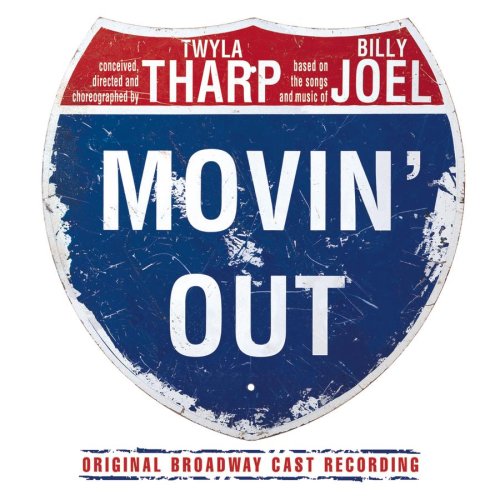
My friend, Amy, called the other day and said she had extra tickets to the opening performance of the Billy Joel/Twyla Tharp musical/ballet Movin' Out at the National Theatre in downtown D.C. So, off I went to the theater last night.

Before I go any further with the playbill synopsis and my review of this musical/ballet, let me just say that I am a big Billy Joel fan. One of the very best concerts I've ever been to in my stunted concert going experience was a Billy Joel concert back in the late '80s. There was no opening act and the guy came out and sang his music for almost three hours. It was breathtaking.

I can't entirely say the same for Movin' Out, though.

Playbill Synopsis

ACT I

Long Island in the '60s. The king and queen of the prom, Brenda and Eddie, are finished, while forever sweethearts James and Judy are ready for marriage. Their friend, Tony, is looking for that kind of love, and he finds it with Brenda, who has become her own woman. War takes the men away from hoe, leaving their loved ones to pick up the pieces. James loses his life in combat, while Tony and Eddie return home broken as Judy greives.

ACT II

The vets try to cobble their lives back together. Tony can't seem to find a way to reconnect with Brenda, while Eddie can't connect with anyone. Spiraling into a lonely existence of drugs and self-loathing, Eddie takes a tour through a nightmare of his past, projecting Judy as his guide. By chance, he encounters Judy jogging in the park, and her forgiveness allows him finally set his life back on track. Brenda and Tony rediscover the love needed to heal their wounds. The friends reunite to discover they have all found their way back home.

My Review

Movin' Out is set on a stage that is devoid of props save a set of chain link fencing, a bank of lights, and a rig of scaffolding where the Movin' Out Band plays their accompaniment of Billy Joel hits while the ensemble of Twyla Tharp dancers cavort about the stage. Other props included a red sports car in the opening act and a snaking bar in the second act.

The production opens with an overture of "It's Still Rock and Roll to Me" and immediately moves into our principals, Brenda and Eddie, splitting up to the music of "Scenes from an Italian Restaurant." At times, the opening sequence felt bland in its effort to set the stage. Brenda's break up with Eddie is punctuated by her mounting the scaffolding and throwing her promise ring down to Eddie as he and his friends dance around the stage.

The first act continues in a chunky, choppy sort of feel with James and Judy falling in love and marrying, Brenda making a comeback sans Eddie, and the three friends--Eddie, James, and Tony--going off to Vietnam. The scene where James dies in combat seemed like an attempt to mimic Ms. Saigon, but fell hopelessly flat and was poorly enacted using ballet as the medium. In the end, it was just loud, smoky, and obnoxious. The first act ends with an honor guard presenting a tri-folded flag to Judy.

At intermission, I noticed a number of people packed up their bags and left. I observed to Amy that I had expected dialogue, in addition to the great repertoire that is Billy Joel's portfolio and the groundbreaking choreography that is Twyla Tharp's. I wondered if I had missed something in my understanding of what this production would be.

Act II began with the return of Eddie and his veteran buddies from Vietnam, and their subsequent ostracism from society. Eddie adjusts poorly to being back in the world and tailspins into a period of drug abuse and sexual deviance. (Note: I'm not sure this was an appropriate musical for kids under 16. The 12 year old sitting in front of us really craned to be able to see the debauchery being depicted on stage. Very little was left to the imagination.)

Eventually, Eddie's nightmares and a chance encounter in the park with James' widow, Judy, turn his life around. Judy forgives him for coming back from the war without James and Eddie moves back into society a healed man. Throughout Eddie's struggles, Tony and Brenda have their ups and downs, but they also reconcile and rediscover love. The friends reunite and the musical closes with a reprise of "Scenes from an Italian Restaurant."

While Act I was less than laudable and Act II started out haltingly, by the time Eddie has his nightmares, the combination of Joel's music and Tharp's choreography redeemed itself and the production acquired a moving quality that left you energized and charged by the talent of Joel and Tharp.

As this was opening night, perhaps some of the choppiness can be explained away by the dancers and musicians getting their feet under them, so to speak. My exposure to ballet has been largely traditional (i.e. The Nutcracker, Swan Lake, et. al.) so contemporary dance/ballet is always a new experience. I was impressed by the men's ability to dance in tight jeans and Keds; no small feat, I'm sure.

The Movin' Out Band did a decent job of rendering Joel's music with the same verve Joel himself brings to his portfolio, but occasional notes fell flat or words were grossly mispronounced. The sound check should have been more precise as the microphone for the soloist was a bit high resulting in garbled singing at times.

Overall, it wasn't a horrible musical, but if you were expecting dialogue and less music video, this was a bit overrated and disappointing.

Out of five stars, I'd give it a three.

Movin' Out, Dec. 5 - 23 at the National Theatre, Music by Billy Joel, Choreography by Twyla Tharp.